

There are certain New York moments that do not fit neatly into sports pages.
A Knicks home game in the NBA Finals is one of them.
It is basketball, of course. It is Jalen Brunson, Madison Square Garden, celebrities in courtside seats, the orange-and-blue roar, the subway ride home, the chants spilling onto Seventh Avenue, and the old familiar belief that maybe, finally, this is the year.
But it is also something bigger. It is memory. It is money. It is family. It is status. It is nostalgia. It is New York measuring itself in real time through the building it still calls, without apology, the World’s Most Famous Arena.
The Knicks are back on the Finals stage, and for New Yorkers, that means more than a series. It means that one of the city’s oldest emotional investments has suddenly become current again.
For older fans, it reaches back to 1973, when the Knicks last won an NBA championship. For their children, it recalls stories passed down like family heirlooms: Willis Reed, Walt “Clyde” Frazier, Earl “The Pearl” Monroe, Bill Bradley, Dave DeBusschere, Jerry Lucas, Phil Jackson, Red Holzman, and a team that still lives in the city’s imagination more than half a century later. For younger fans, it is a chance to finally witness something they have heard about but never experienced: a New York Knicks team playing for everything.
And for everyone, it raises a strange and fascinating question:
What does it cost now to be inside the dream?
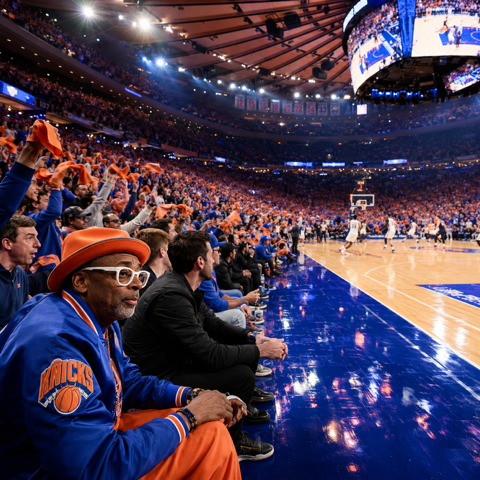
In 1973, a fan could attend an NBA Finals game at Madison Square Garden for a standard face-value ticket that, by modern standards, feels almost impossible to imagine. Reports from that era place many Garden seats in the range of roughly $5 to $15. Even adjusted for inflation, that is not remotely close to what the market demands today.
Now, the numbers attached to a Knicks Finals game at the Garden feel less like ticket prices and more like real estate listings.
Secondary-market “get-in” prices have reportedly reached several thousand dollars per seat. Premium lower-level seats can rise into the tens of thousands. Courtside inventory, when available, has been reported in six-figure territory, with some select listings or auction activity reaching the kind of numbers usually associated with luxury cars, down payments, or Wall Street bonuses.
The contrast is almost absurd.
From $15 Garden seats to $500,000 courtside.
From fathers taking sons to the game after work to families doing math on whether attending one night at the Garden is even remotely rational.
From the old New York of cigar smoke, paper tickets, box scores, and local legends to the modern New York of dynamic pricing, celebrity rows, luxury suites, social media clips, and global attention.
Yet the remarkable thing is not just that the prices have changed.
It is that the desire has not.
If anything, the desire may be stronger now because of the waiting.
The Knicks have not won an NBA championship since 1973. That is not merely a drought. It is a civic timeline. It has stretched across mayors, presidents, recessions, booms, blackouts, rebuilds, superstar eras, heartbreaks, draft lotteries, coaching changes, front-office controversies, and generations of fans who learned that Knicks loyalty often required a sense of humor, a high tolerance for frustration, and a belief system not always supported by the standings.
In New York, sports pain has a particular texture. It is loud. It is communal. It is sarcastic. It is deeply informed. Knicks fans do not simply watch; they litigate. They remember old rotations. They argue substitutions. They know who took the bad shot, who failed to box out, and who never should have been traded.
But they also show up.
That is what makes this moment feel so powerful. New York did not need to be taught how to care about the Knicks again. The city never really stopped. The Garden did not become important because the Knicks are winning. The Garden remained important through all the years when they were not.
Now that winning has returned at the highest level, the emotional pressure is extraordinary.
There is a particular kind of New Yorker who can tell you exactly where they were in 1973. There is another who grew up hearing those stories. There is another who remembers the Patrick Ewing years and the 1999 Finals run. There is another who came of age during darker seasons and wondered whether the Knicks would ever again become what the city insisted they still were.
And then there are the children watching now, the ones who may one day tell their own story of where they were when the Knicks came home in the Finals.
That is how a basketball series becomes generational.
The 1973 Knicks were not just champions. They were a collection of names that became part of New York’s cultural vocabulary.
Walt Frazier was style and control, a guard whose game seemed to move in rhythm with the city itself. Willis Reed was toughness made visible. Earl Monroe brought flair and invention. Bill Bradley brought intellect and poise. Dave DeBusschere gave the team grit and defensive identity. Jerry Lucas was a brilliant passer and thinker. Phil Jackson, long before he became the coach of Michael Jordan, Scottie Pippen, Kobe Bryant, and Shaquille O’Neal, was part of that Knicks championship fabric. Red Holzman gave the team its structure, its discipline, and its enduring mythology.
Those Knicks defeated the Los Angeles Lakers, a franchise with its own galaxy of basketball history. The 1973 Finals were not just a championship series; they were a meeting of basketball royalty. The Lakers had stars, legends, and the aura of Hollywood. The Knicks had New York’s toughness, intelligence, depth, and a style that still feels unusually elegant in memory.
That team remains one of the most historically decorated in league history. Its starting lineup became enshrined in basketball memory in a way that may never be duplicated. It represented a version of New York that liked its stars talented, cerebral, unselfish, and tough enough to survive the Garden’s expectations.
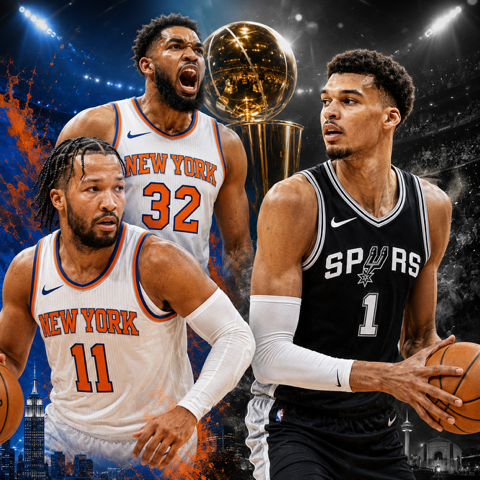
Today’s Knicks occupy a different world.
The league is global. The money is enormous. The Garden is not merely an arena but a premium live-entertainment asset. NBA stars are international brands. Every tunnel walk can become content. Every courtside celebrity sighting can travel the world in seconds. Every ticket is priced by a market that understands scarcity down to the minute.
And yet, when the ball goes up, the city’s reaction is not all that different.
New Yorkers still lean forward.
They still yell at the television.
They still call friends after the game.
They still walk into diners, offices, bars, gyms, elevators, and lobbies asking, “Did you see that?”
That is the magic of this Knicks moment. It belongs both to the old city and the new one.
The old city remembers when a Garden ticket could be a working person’s splurge. The new city understands that the same building now hosts events where access itself is a symbol. The old city remembers a team whose players became neighborhood gods. The new city watches a Finals game through a digital mirror, where the Garden crowd is not only attending but broadcasting itself to the world.
The Knicks sit at the intersection of those two New Yorks.
That is why the ticket prices matter. Not because expensive tickets are new in Manhattan. They are not. New York has long been the capital of impossible price tags. But the escalation from 1973 to today captures a larger story about the city itself.
New York has become richer, more global, more stratified, more watched, more branded, and more expensive. A Knicks Finals ticket is no longer just a seat. It is access to a civic event. It is an artifact of scarcity. It is a social signal. It is a memory being purchased in advance.
For some, that is thrilling. For others, it is painful.
There is something bittersweet about the idea that the same team carried for decades by ordinary fans may now be playing its most important home games in front of an audience that many ordinary fans can only watch from a distance. The Garden will be loud, but outside the Garden may be louder. Bars will be packed. Apartments will be crowded. Families will gather around televisions. Friends will text through every possession. Strangers will become temporary allies on sidewalks and subway platforms.
That, too, is New York.
The dream may be priced differently now, but it has not become private.
The Knicks are one of the rare New York institutions that can still make the entire city feel like one enormous room. In a fragmented media age, that is no small thing. A Knicks Finals game gives New Yorkers a shared subject, a shared anxiety, a shared hope, and a shared language. For a few hours, the city’s usual arguments are replaced by one larger argument: can they actually do it?
That question carries weight because of the 53 years behind it.
It is not only about winning a championship. It is about completing a sentence that began before many current fans were born. It is about fathers and sons, mothers and daughters, grandparents and grandchildren, old jerseys and new ones, Clyde on the broadcast, photos from the 1970s, and the strange emotional inheritance that comes with loving a team that has made patience part of its identity.
Madison Square Garden has always understood theater. It does not need a championship to feel dramatic. But when the Knicks are in the Finals, the Garden becomes something else entirely. It becomes a stage on which New York performs its own memory.
Celebrities may sit courtside. Executives may fill luxury suites. Billionaires may bid for the best seats. Politicians may appear. Cameras may search the crowd for famous faces.
But the real star remains the sound.
That Garden sound is one of the great New York sounds. It is not polite. It is not manufactured. It rises fast and suspicious, like New Yorkers are willing belief into existence while also preparing to complain if belief betrays them. When the Knicks are good, the Garden does not merely cheer. It detonates.
That is what fans are buying, whether for $15 in memory or thousands today.
They are buying the chance to be inside the noise.
The rest of the country may see the Knicks as a basketball team. New York sees them as a long-running civic drama with box scores. The plot has included heroes, villains, false starts, collapses, stubborn loyalty, and now, perhaps, a return to something that once felt permanent and then disappeared for half a century.
In 1973, a Knicks championship reflected a team of future legends and a city that still saw itself through the grit and glamour of the Garden. Today, another Finals run reflects a changed city: wealthier, more global, more expensive, more digital, but still capable of gathering around a shared dream.
That is why this moment matters.
Not because every fan can afford to be in the building.
Not because ticket prices have become astonishing.
Not because courtside seats may sell for amounts that would have been unimaginable to the fans of 1973.
It matters because the Knicks have reminded New York of something it has always known but has not always had reason to feel:
When the Garden is alive, the city feels different.
For 53 years, the 1973 Knicks have belonged to memory. Their names have lived in highlights, stories, documentaries, old photographs, and the reverence of fans who understood that they had witnessed something extraordinary.
Now, a new generation has its own chance to witness something.
The price of admission has changed. The city has changed. The NBA has changed. The business of sports has changed.
But the dream?
The dream is still wearing orange and blue.